
Unleash the Giants of the Amazon
Explore the most thrilling river monsters—from arapaima and catfish to peacock bass—and discover the species that make every expedition unforgettable.
Discover the River Giants
Dive into a world where legends swim.
From the mighty arapaima to razor-sharp catfish, explore the astounding variety of species that make the Amazon Basin one of the most thrilling fishing destinations on earth. Whether your goal is an epic trophy catch or simply witnessing nature in its rawest form, each of these incredible fish tells a story — and we’ll bring you right to the heart of it.
The Giants We Chase
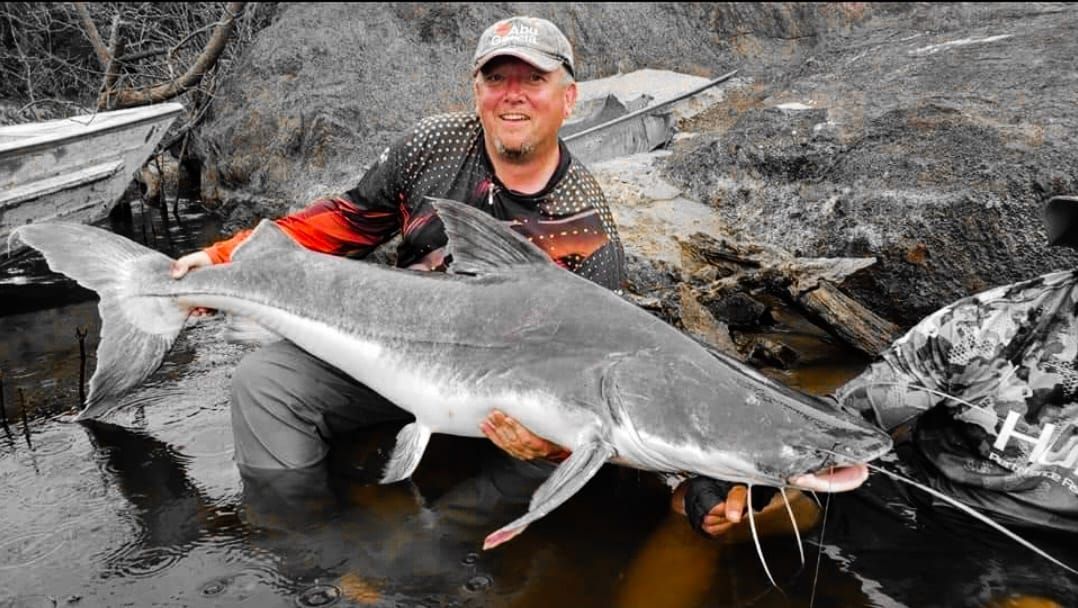
Paraiba Catfish / Lau Lau
With a dorsal fin and body shape similar to a shark, hence the local name freshwater shark of the Amazon, this is undoubtably the largest of the Amazonian Catfish with reports exceeding 400lbs. Once hooked these fish strip line like a freight train, and usually head downstream / upstream in the middle of the river. Keep an eye on your reel spool and be ready to chase them down in the boat.
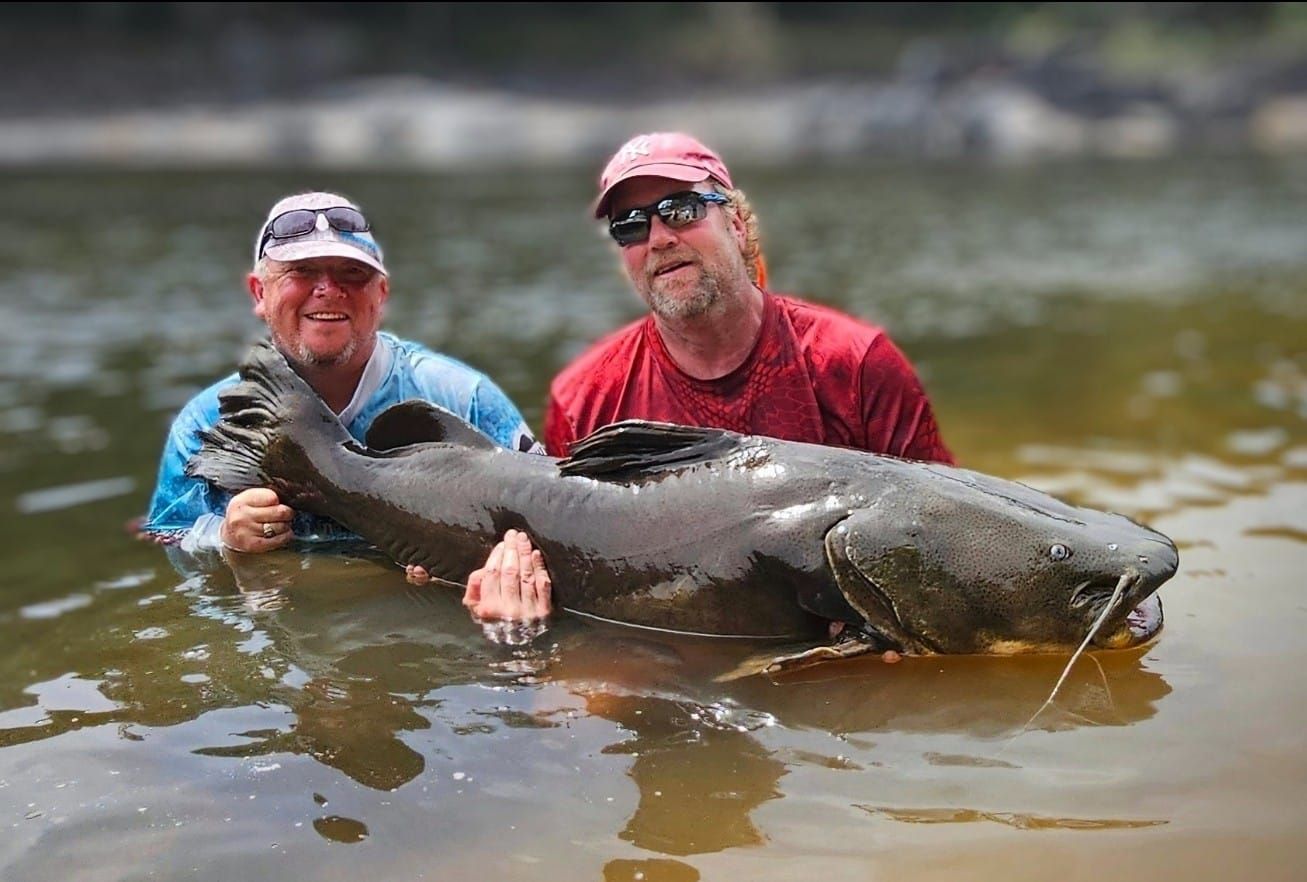
Jau Catfish
The cave dweller of cats, these powerhouses of the Amazon are strong and cunning, spending the majority of there time in and around rocky oxygenated waters in fast water rapids and below waterfalls. They occasionally roam into the shallow turbulent waters and take refuge under rocky banks. Once hooked they head for the nearest cave and lock themselves in by wedging their pectoral fins into the rocks.
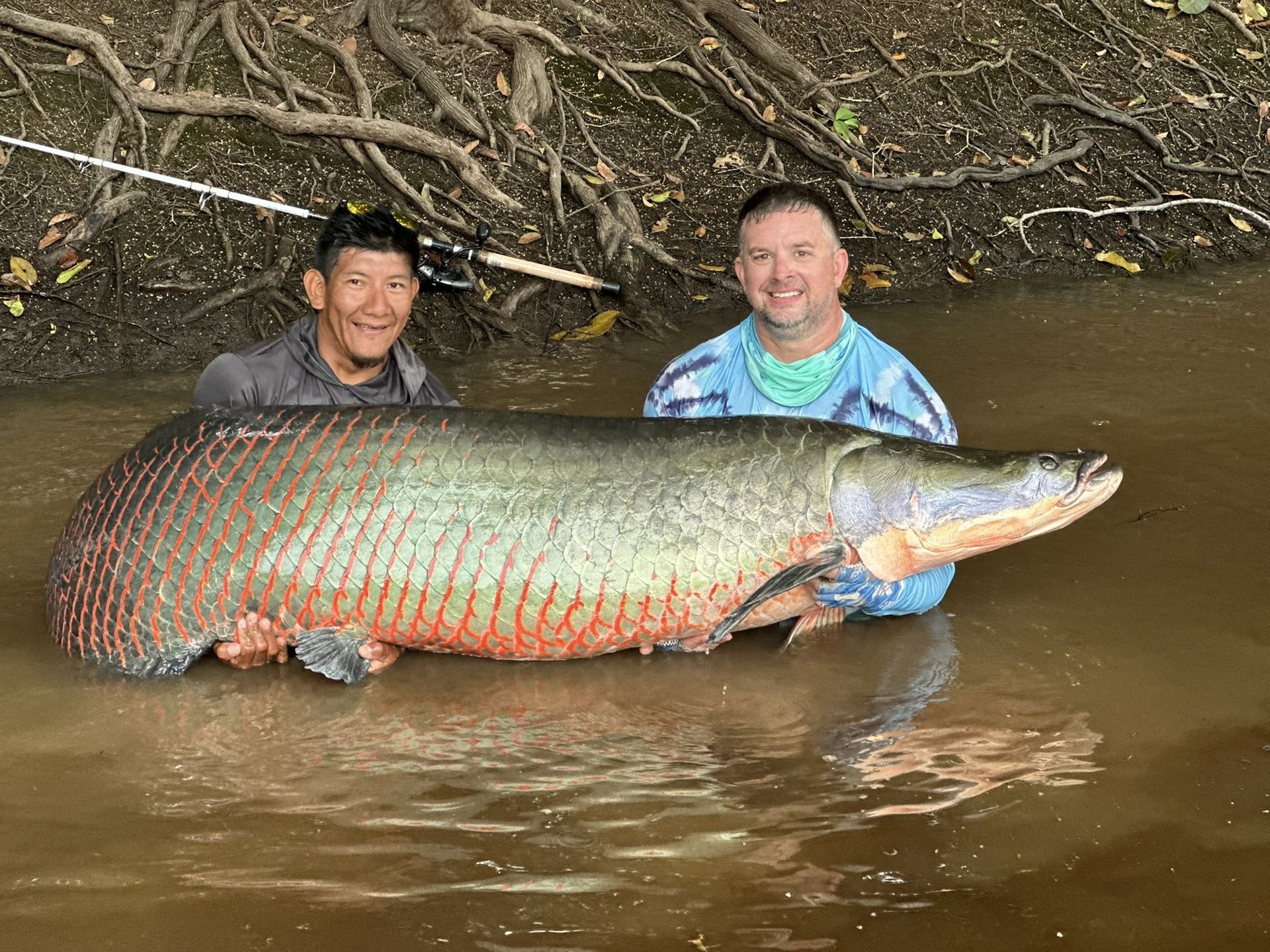
Arapaima Gigas
The Mighty Arapaima is on every angler’s bucket list. Arapaima prefer the slow shallow lagoons, ponds and backwaters. They roam from pond to pond during the rainy season and can reach in excess of 400lbs. Our average-sized fish caught here is usually between 100lbs to over 350lbs. An incredibly strong fish, it usually fights in short, fast bursts with explosive acrobatic jumps.
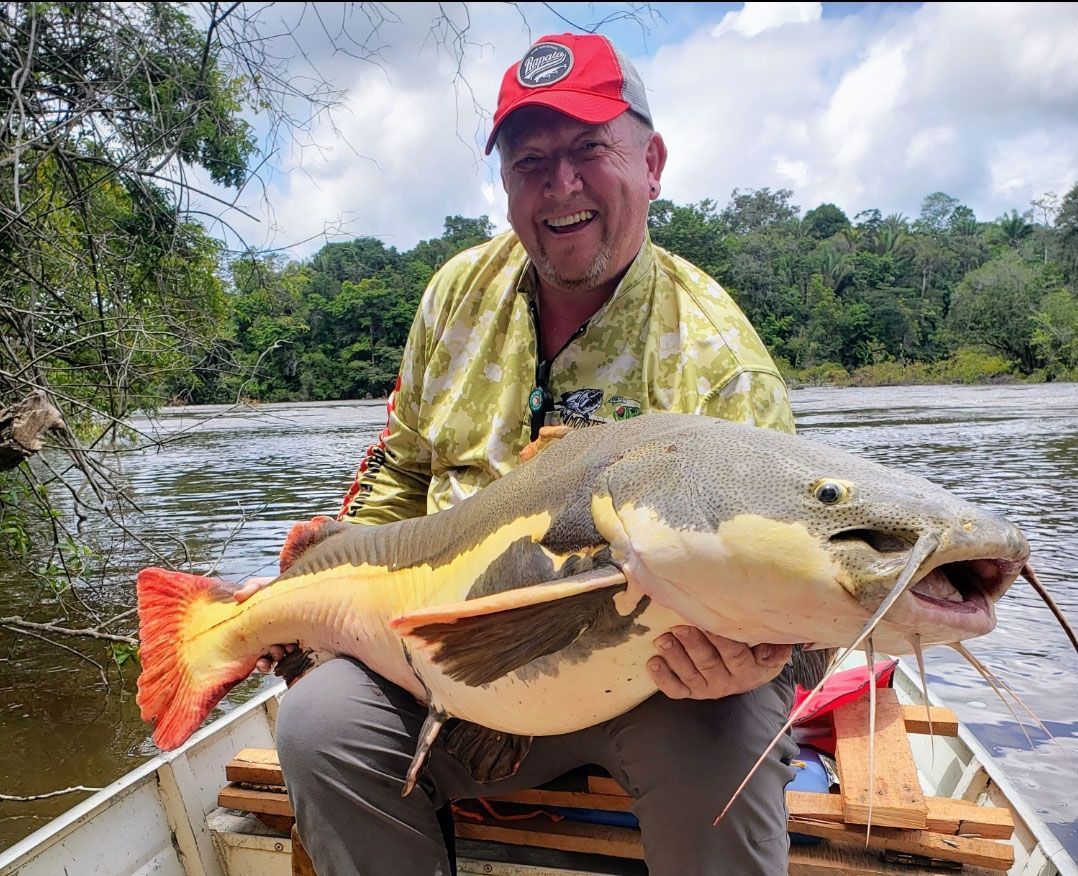
Red Tail Catfish
Also known as the Banana Fish for its golden underbelly, the Redtail Catfish is a relentless fighter. Once hooked, it charges straight for snags, rocks, and submerged logs, tearing line from your reel with explosive power and making multiple long runs before surrendering. As it nears the boat, it lets out a deep grunt — though it’s hard to say who’s louder, the fish or the angler. Hooking one of these Amazon giants is an experience that will leave you breathless.
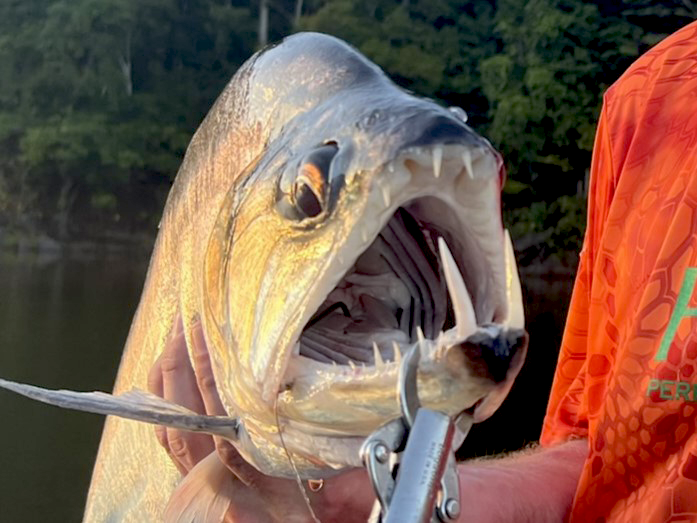
Payara / Vampire Fish
Payara are a fun fish to catch, often throwing the hook when leaping due to their jawbone structure. We have two species of Payara, the larger more common silver payara can reach up to 25lb and the smaller red tail payara up to 10lbs. Payara’s will eat anything, from cut bait strips to shallow divers or glide baits to top water spooks. During the dawn and dusk hour’s, the Payara hunt in the top water column, once the heat picks up they go deeper and can be caught with deep divers and jigs.
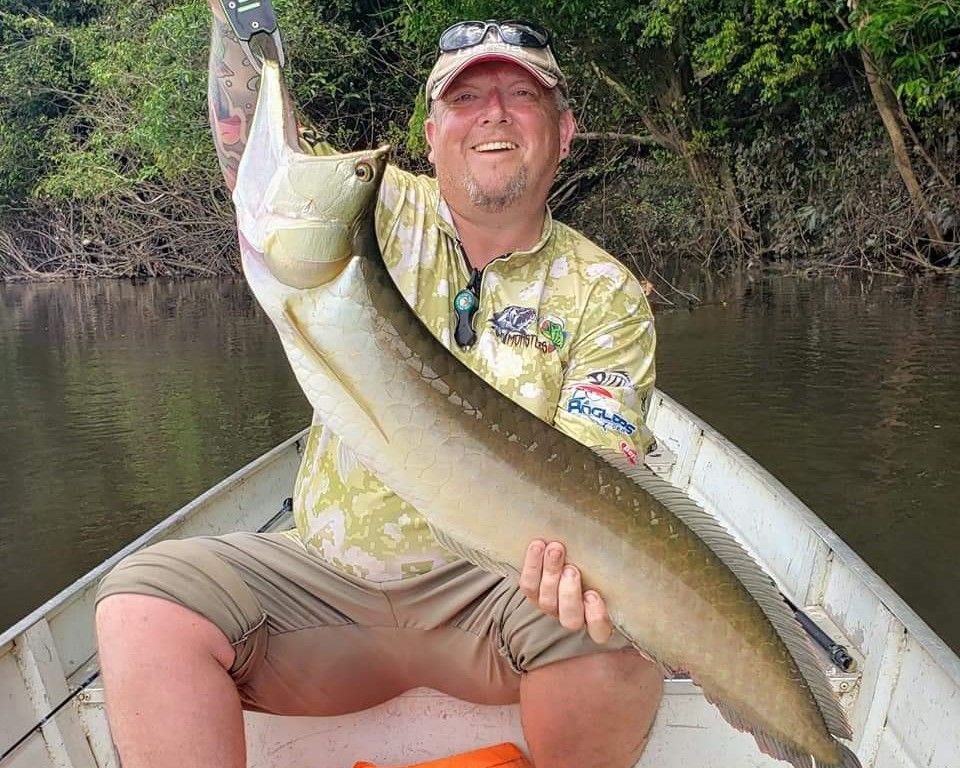
Arowana / Monkey Fish
With a snake like body, these fish can swim backwards. Often hiding under trees and hugging the river-bank searching for prey, they can leap to grasp insects / frogs from over hanging branches. They can be caught on top water walk the dog style baits and poppers, and will also take small pieces of cut bait. Amazing athleticism leaping several times during the battle. Growing up to 14lbs. The Amerindian’s hunt them with tradition hand carved bow and arrow.
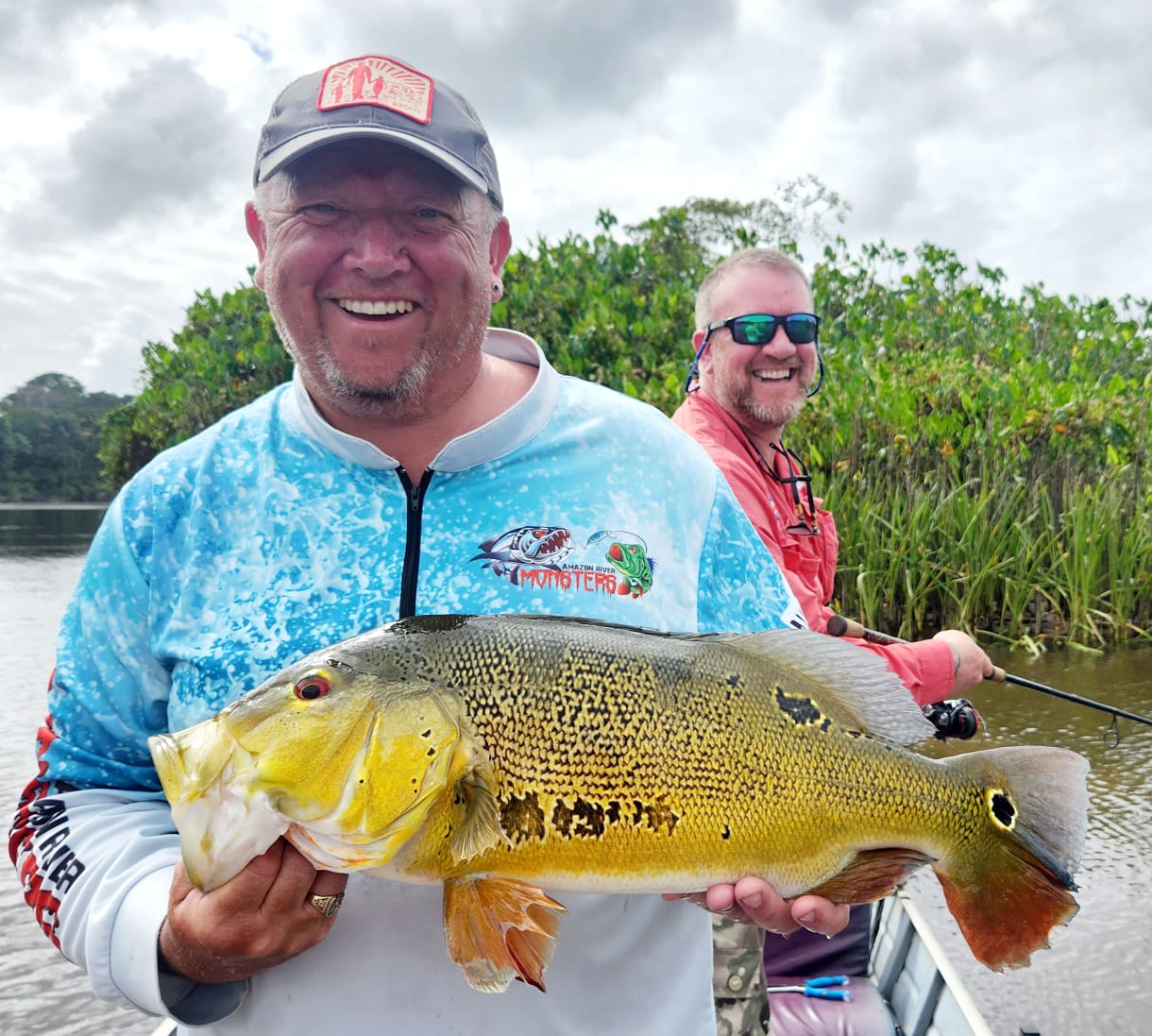
Peacock Bass
We have two species of Peacock Bass throughout the Essequibo, the ‘Yellow’ Peacock Bass can reach 15lbs and the smaller Butterfly peacock reaching up to 10lb. Its not uncommon to find them in huge schools residing under fallen trees / structure close to the bank. During the midday hours throw a medium to deep diver or jig along the rocky
Bicuda / Swordfish
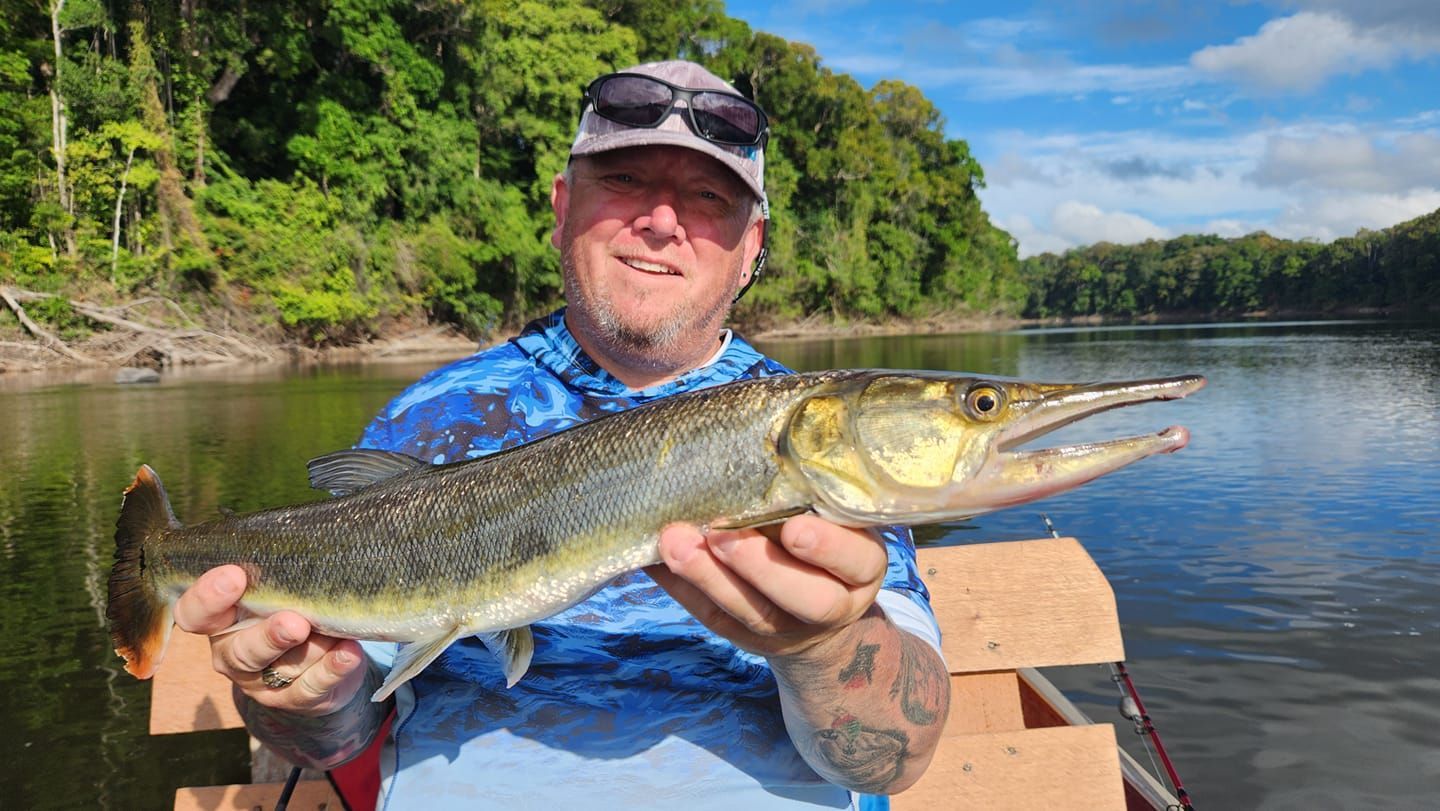
Another Acrobatic fish that will strip line from your reel in seconds, similar to the Payara they can be difficult to keep on the hook due to there jawbone structure. Average size fish in the 6 – 8lb range but can reach 16lb. They can be caught on top water spooks, poppers, shallow diving minnows and glide baits.
Black Piranha
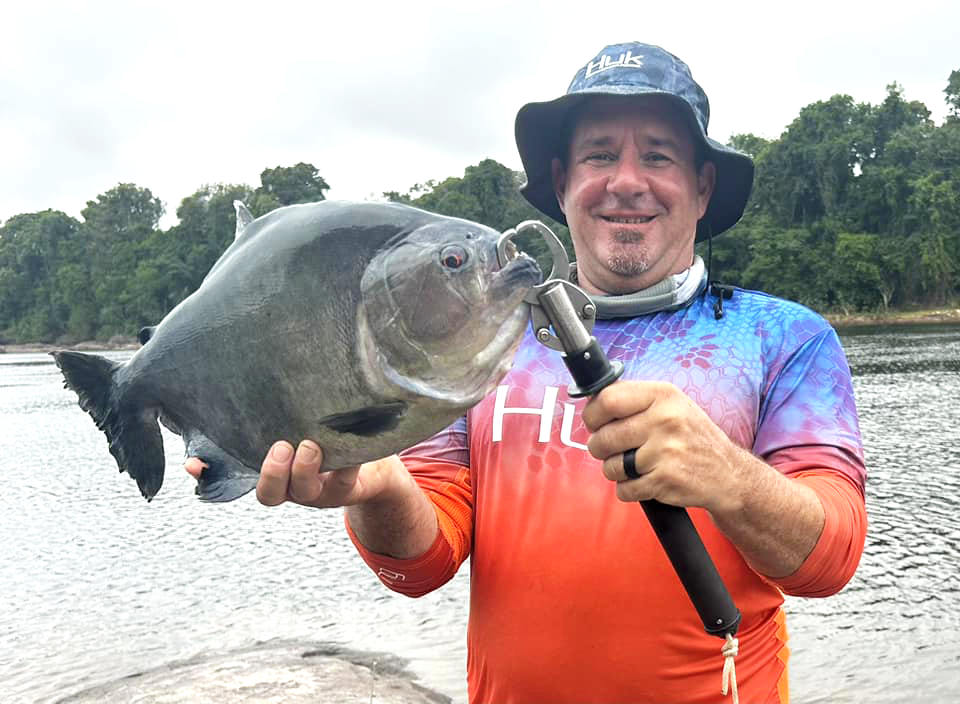
The Red eyed demon of the Amazon, a very aggressive fish and abundant throughout the Essequibo, these fish will devour anything in their sight, often biting chunks out of any passing fish. They can grow to approx. 9lb and an awesome scrap on medium / heavy rods. Be prepared to change out lures and or hooks often due to their bite pressure which is approx. 72 psi per pound of fish.
Red, Silver and Moon Drill Pacu
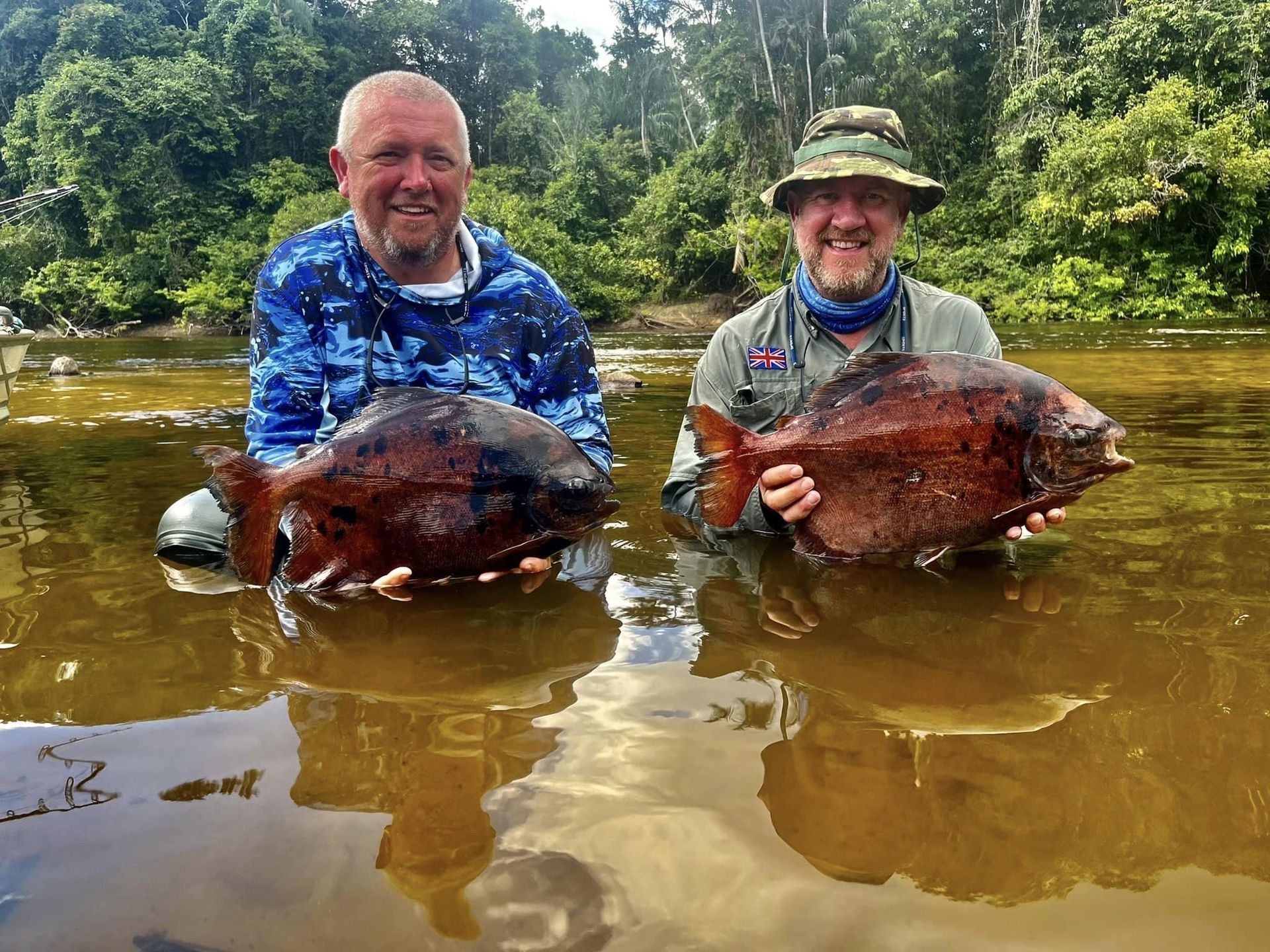
A very strong powerful fighting fish, these species will take small lures and spinners, however their main diet is fruit and nuts. They can also be caught by hooking a small fruit directly to the hook and repeatedly plopping the water mimicking the fruit dropping from trees. Excellent table fare.
Surubim Catfish
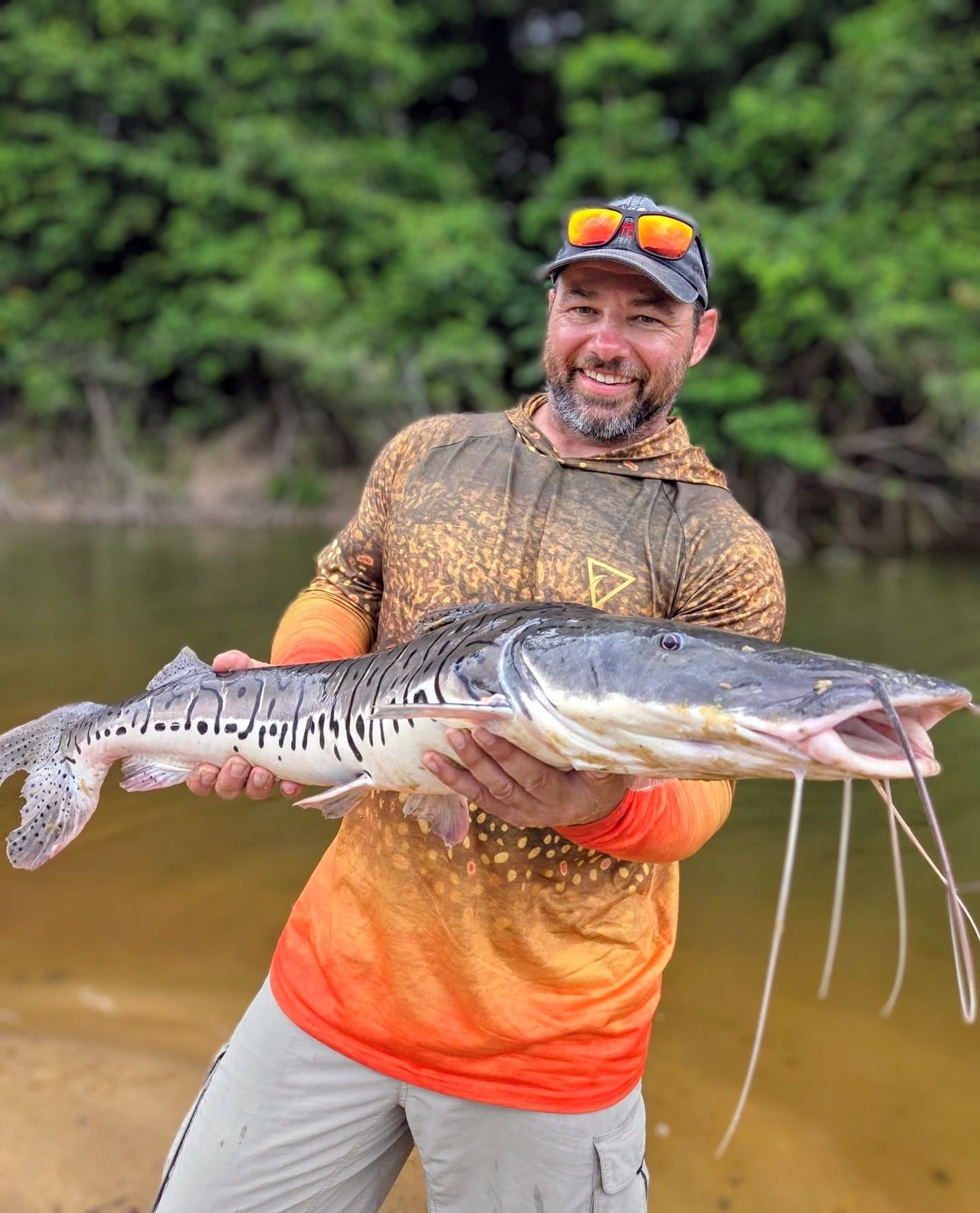
The markings on these fish are beautiful, but don’t be fooled by their looks, they are one of the fastest species of cats in the river, they patrol shallow water sandbanks and points searching for prey, they will hit shallow diving lures, jigs and spoons and will also take small cut baits. Similar to the Leopard catfish they can also be caught in deeper pools and at creek mouths.
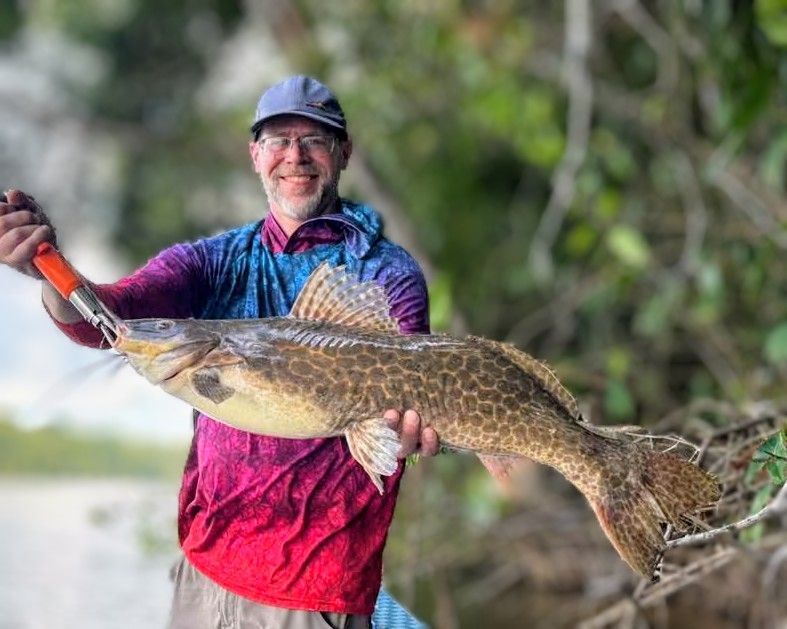
Leopard Catfish
Pound for pound this is one of the most powerful catfish in the Amazon, with its honeycomb / leopard markings this is truly one of my favorites. They can be caught on small cut baits and worms. Try jigging deep pools with a strip of cut bait or using a small 1oz sinker weight and baited hook at the creek mouths. One of the Amerindians favorite eating fish.
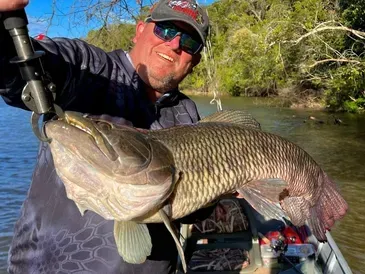
Wolfish
They will be found in rivers, rapids, waterfalls and flooded forest floor environments of the northern part of the South American continent. The Wolffish is prehistoric looking and is considered by many to be the most ferocious species in the amazon passing the Piranha. They are ambush predators by nature and once hooked they put up a vicious fight. They can also breath air to help boost their oxygen supply in oxygen-poor habitat like lagoons.
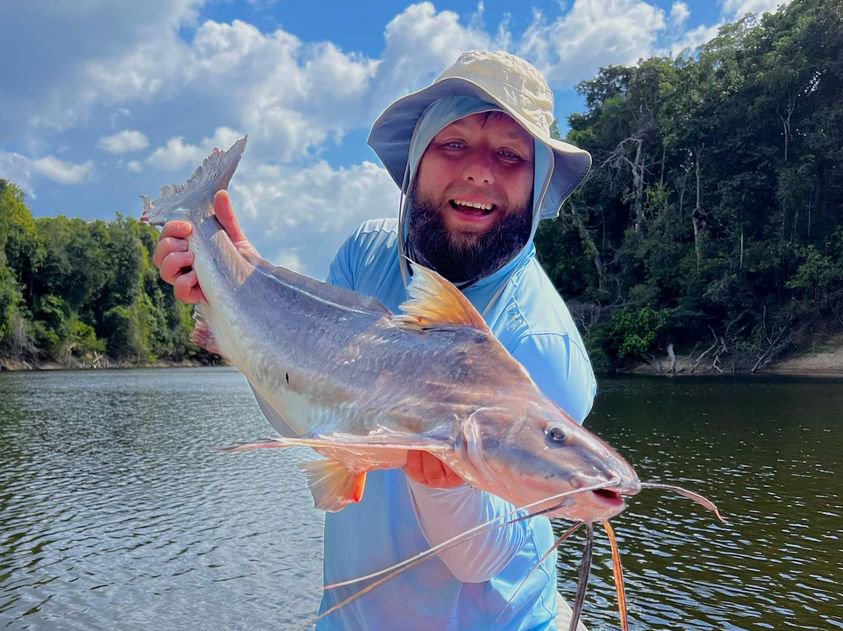
Long (Flat) Whisker Cat
They can be found in the rivers swimming in schools. Active and swift, these fish love deep waters and open spaces. They have characteristically elongated gray bodies and large flattened heads, each specimen brandishing a set of long barbells. This guy is powerful and fast and can range all the way up to 50lbs
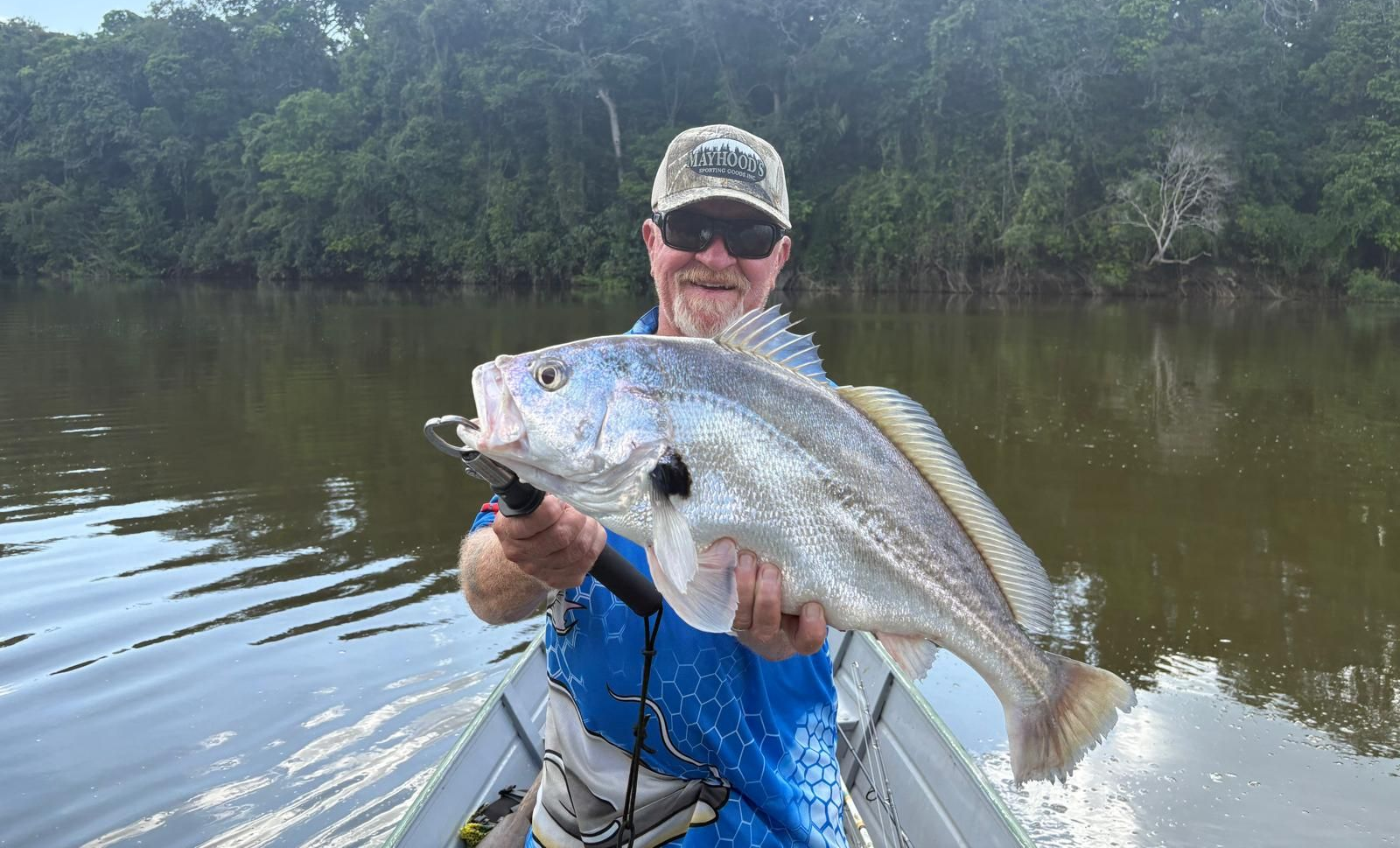
Pescada / Croaker
They tend to occupy deeper, oxygenated waters often near lagoon mouths. They are relatively aggressive feeders and will hit artificial lures, cut bait and live bait. These solid, hard-fighting and brightly silver-colored fish live in the depths and reach up to 15lbs. These fish can be heard in the boat when you are over a "school" that is actively feeding sounding like drum giving it the nickname freshwater drum.